

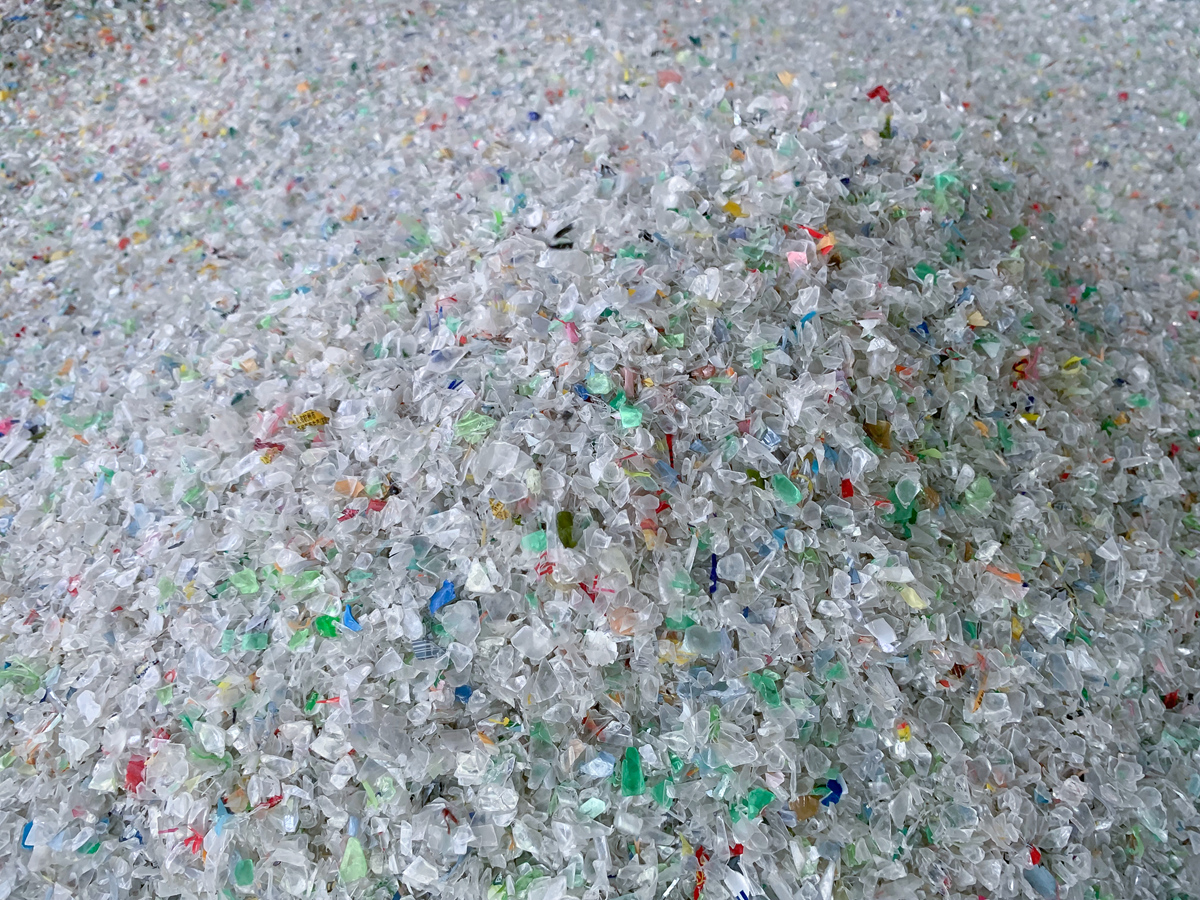
The choice of extruder type is a critical factor determining both the final pellet quality and production efficiency in the process of recycling PET bottle flakes into pellets. Single-Screw Extruders (SSE) and Parallel Twin-Screw Extruders (TSE) are the two dominant pelletizing equipment types, each possessing distinct advantages and limitations, making them suitable for different application scenarios. This analysis delves into the key differences between these extruders and explores how to select the most appropriate equipment based on practical needs to achieve high-quality recycled PET pellet production.
I. Comparison: Single-Screw Extruder (SSE) vs. Parallel Twin-Screw Extruder (TSE)
1. Single-Screw Extruder (SSE)
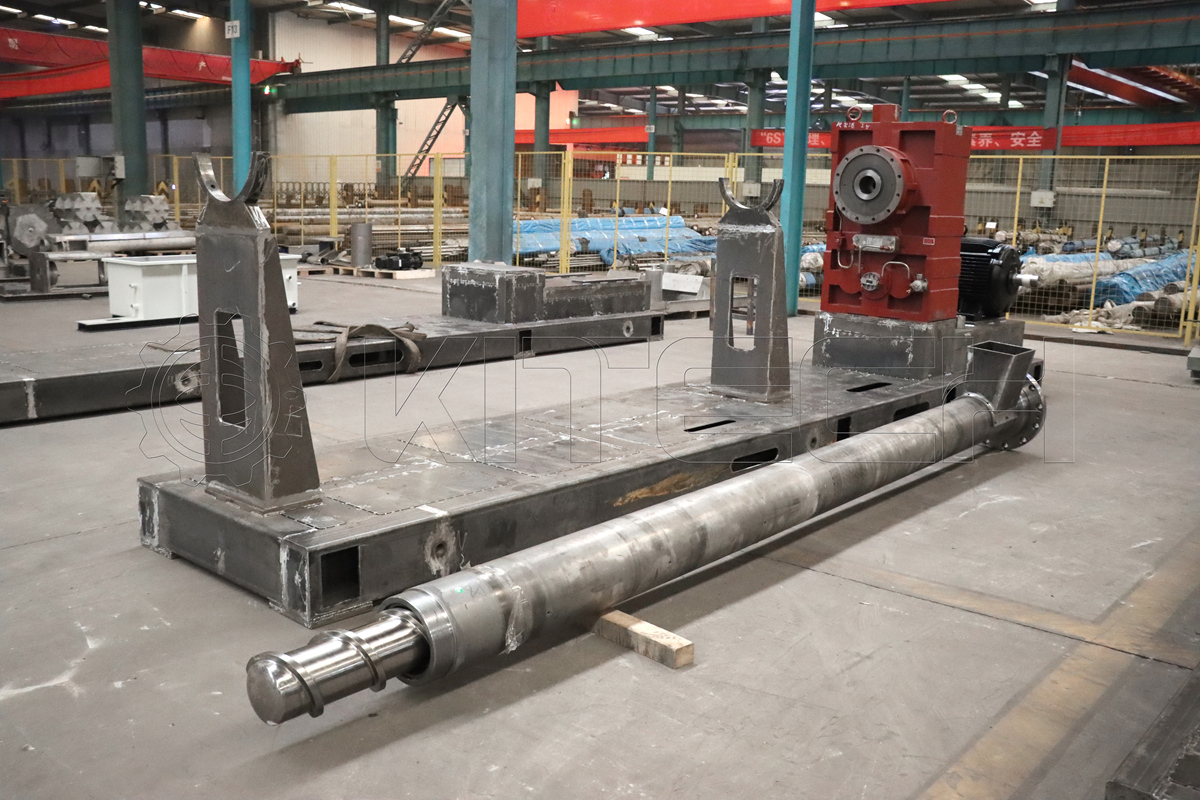
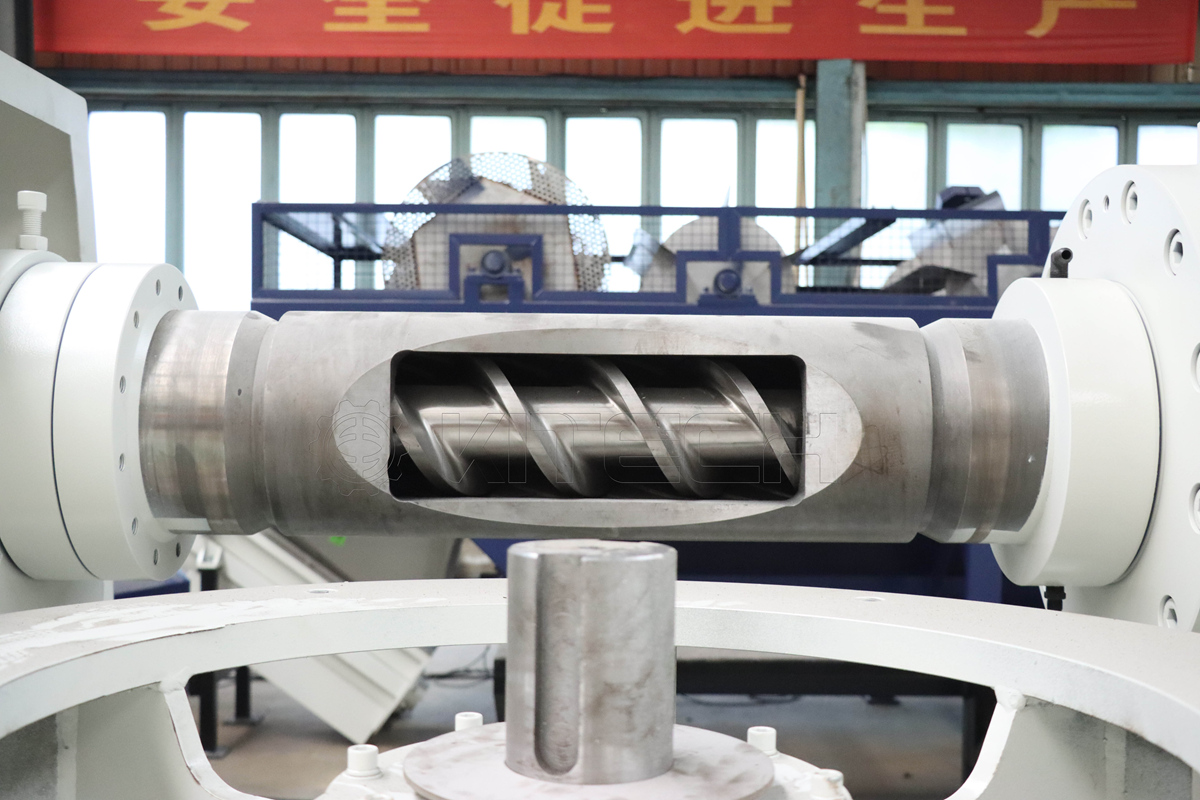
(1) Working Principle: The SSE features a relatively simple structure, relying on a single rotating screw to accomplish material conveying, compression, melting (plasticization), and metered extrusion. Its core systems comprise the extrusion system (screw and barrel), the drive system (rotating the screw), and the heating/cooling system (precisely controlling material temperature).
(2) Key Advantages:
Lower Equipment Cost: Design, manufacturing, and maintenance costs are relatively lower, making SSE attractive for small-to-medium-sized recycling plants with limited initial budgets.
Simpler Operation & Maintenance: The straightforward structure facilitates easier daily operation, cleaning, and maintenance, requiring less technical expertise from operators.
Good Operational Stability: Due to its simplicity, SSE generally offer stable and reliable operation. Their relatively gentle shear action on polymers effectively reduces the risk of thermo-mechanical degradation during processing, supporting long-term continuous production.
Lower Energy Consumption: Overall power requirements are typically lower than TSE, resulting in more economical running costs.
High Technical Maturity: SSE are the longest-established and most widely adopted extruder type, representing very mature and stable technology.
(3) Key Disadvantages & Limitations:
Weaker Mixing & Dispersion Capability: Mixing within a single screw relies primarily on drag flow, resulting in limited distributive and dispersive mixing. SSE struggle to achieve the high uniformity required for precisely adding and dispersing additives (e.g., masterbatches, functional agents) or fillers, potentially leading to inconsistent pellet performance.
Limited Material Adaptability: Material conveying depends heavily on friction-based dragging. Feeding performance is significantly influenced by material form and friction coefficient. Processing powders, pastes, long glass fiber reinforcements, or highly filled inorganic compounds often leads to feeding difficulties, instability, or bridging.
Insufficient Plasticization Capacity: When handling complex recycled materials with high impurity content (e.g., PET flakes containing labels, adhesives, other plastic fragments, sand), SSEs may exhibit inadequate plasticization efficiency and quality. This can cause poor melt homogeneity, insufficient plasticization, and ultimately impact the stability of pellet quality and physical properties.
2. Parallel Twin-Screw Extruder (TSE)
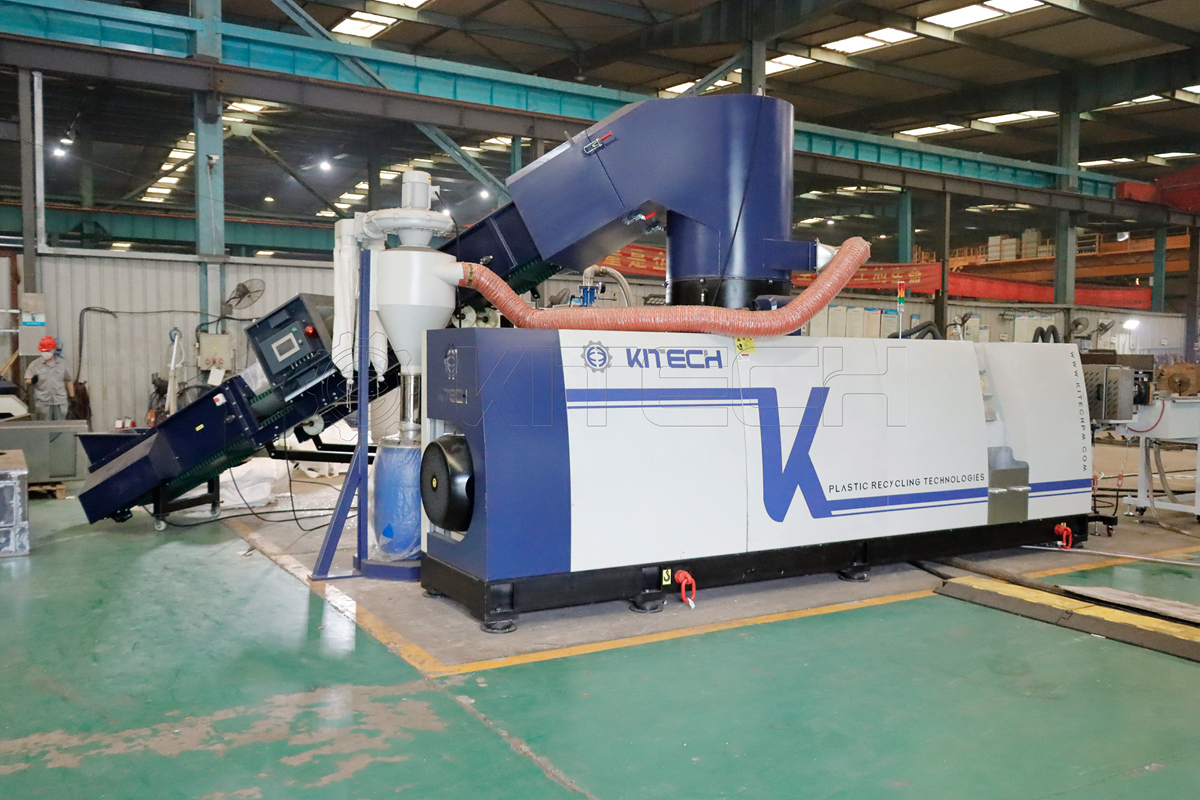
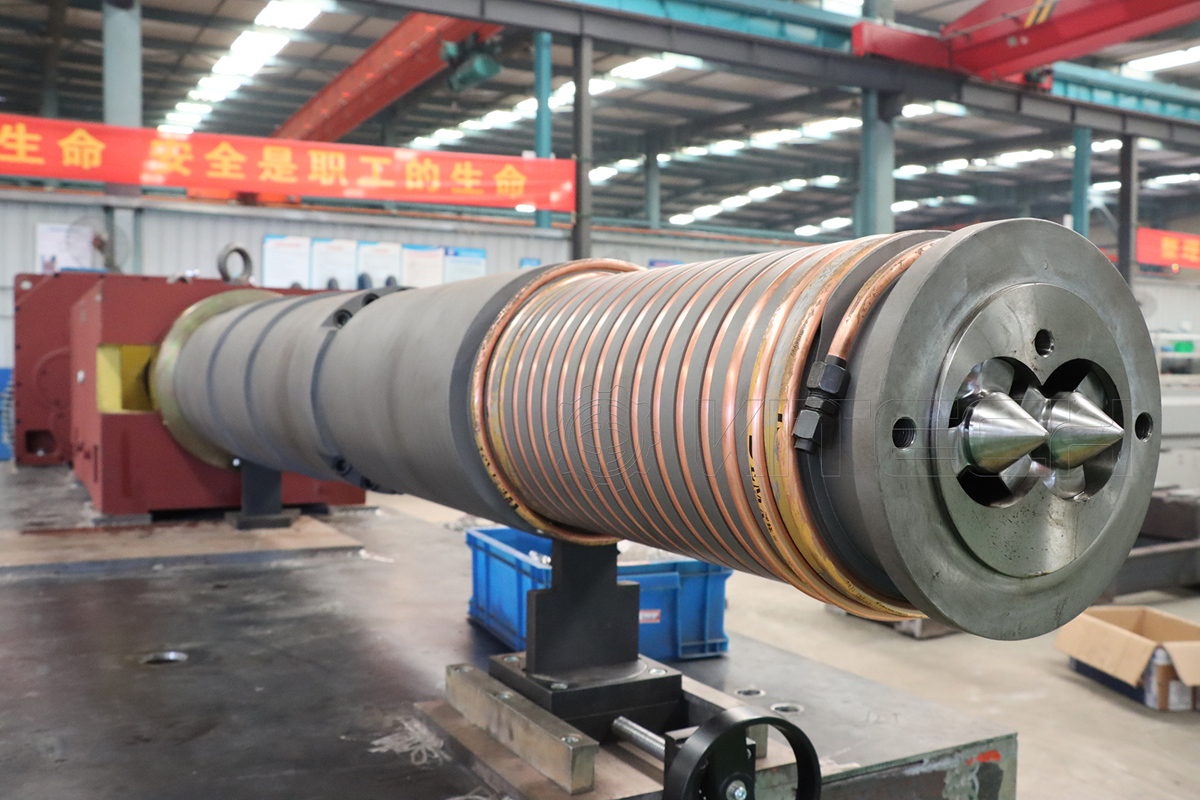
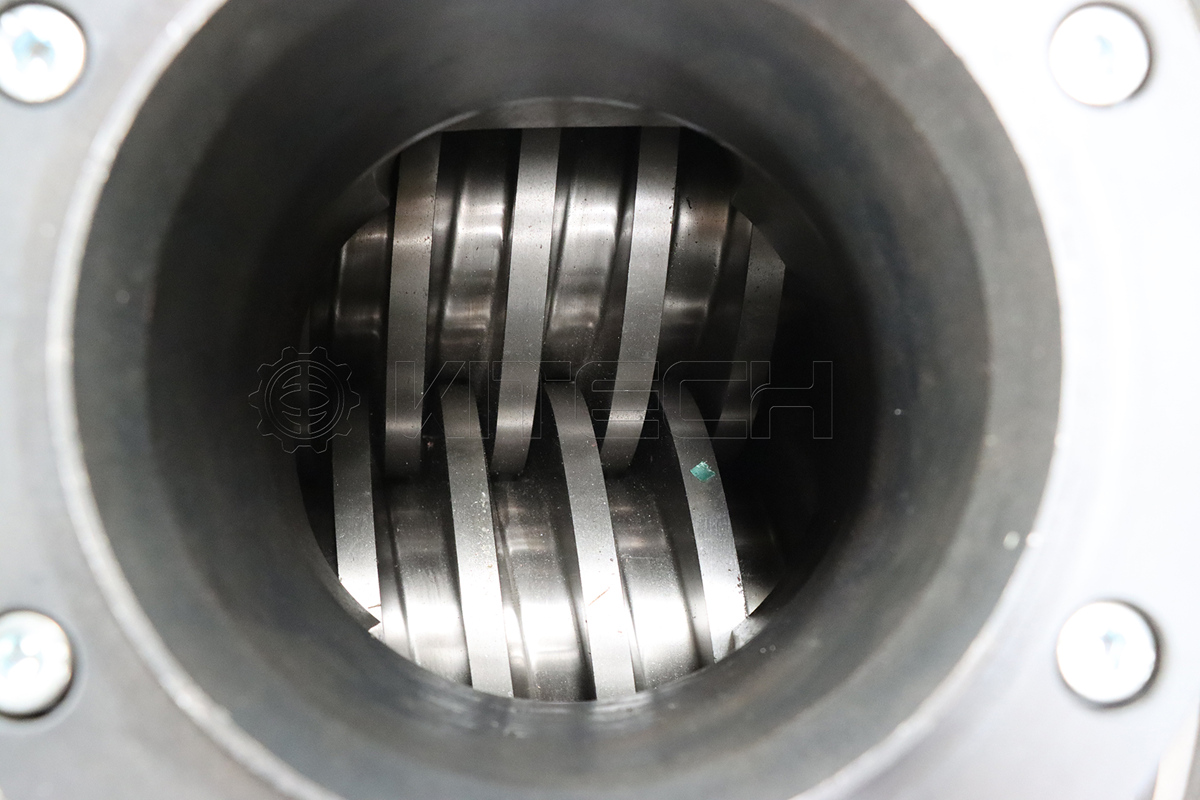
(1) Working Principle: TSE employ two parallel, closely intermeshing screws (rotating co- or counter-directionally) working cooperatively within the barrel. The complex screw geometry (including kneading blocks, reverse elements, etc.) enables not only material conveying but also intense shearing, stretching, compression, and reflux actions. This facilitates highly efficient mixing, melting/plasticization, venting/devolatilization, and homogenization. TSE is particularly suited for processing high-viscosity, heat-sensitive, multi-component, or impurity-laden complex materials.
(2) Key Advantages:
Superior Mixing & Dispersion: The twin-screw design delivers powerful shear forces and complex flow fields, enabling excellent distributive and dispersive mixing. This ensures high compositional uniformity when processing mixtures of different plastics (e.g., PET contaminated with PE/PP/PVC), highly filled systems, or when uniformly dispersing multiple additives.
Efficient Plasticization & Melting: For polymers like PET with high viscosity and sensitivity to thermal history, TSE achieve faster, more uniform, and more controllable (gentler) plasticization through efficient shear heat transfer and surface renewal, significantly enhancing final pellet quality.
Broad Material Adaptability: Their positive conveying characteristics allow TSE to effectively handle materials challenging for SSE, including powders, recycled fragments, highly filled compounds, high-viscosity materials, heat-sensitive materials (requiring precise temperature control), and PET flakes with high contaminant levels (impurities, moisture, other plastics).
Excellent Self-Cleaning: The intermeshing zone design allows the screws to mutually wipe each other, significantly reducing material stagnation and adhesion on screw surfaces, lowering degradation risks, and simplifying screw changes and cleaning.
Precise Zoned Temperature & Pressure Control: TSE typically feature more numerous and precise temperature control zones and pressure monitoring points. This allows fine-tuning of the melting, mixing, venting, and homogenization stages during PET recycling, maximizing process optimization and minimizing PET property loss (e.g., intrinsic viscosity drop).
(3) Key Disadvantages & Limitations:
Higher Equipment Cost: The initial purchase price and subsequent maintenance costs (screw/barrel element wear replacement) are significantly higher than for SSE.
Higher Operational Energy Consumption: Due to their more complex structure and higher drive power requirements, their energy consumption per unit output is usually higher than SSEs.
Higher Operational & Maintenance Complexity: The sophisticated equipment design means process parameters (screw configuration, speed, temperature profile, feed rate, vacuum level) are highly interdependent and complex. This demands greater technical skill and experience from operators, and maintenance tasks are more specialized and complex.
II. Selection Strategy: SSE vs. TSE for PET Recycling Pelletizing
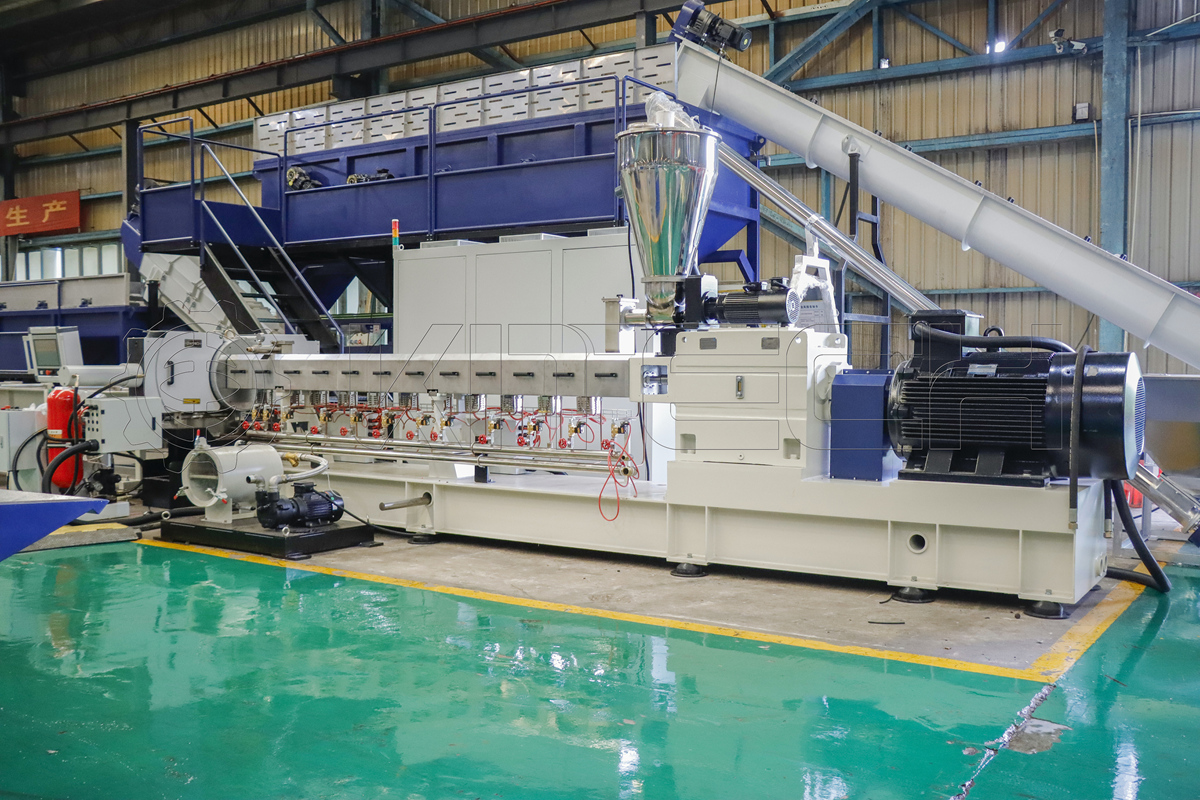
Choosing the right extruder requires evaluating several key factors:
1. Type and Quality of Recycled Material:
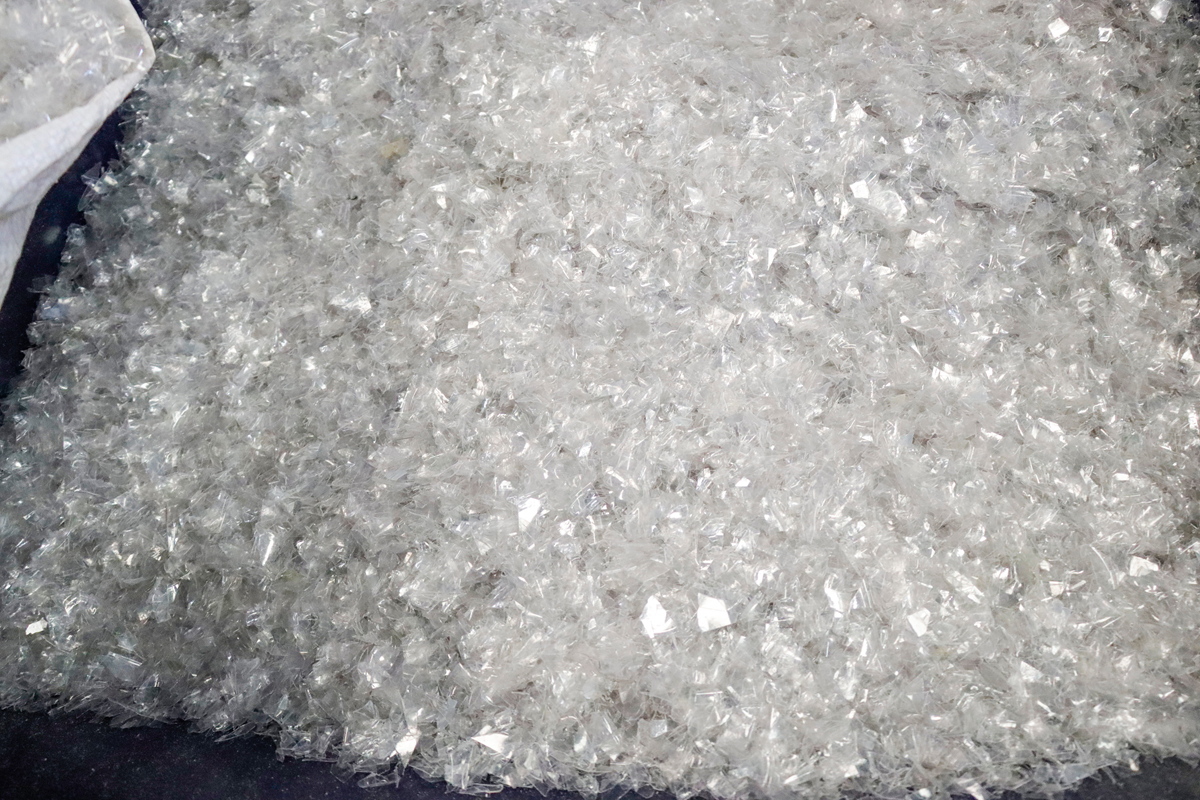
Choose SSE: When the recycled PET flakes are relatively clean (low contamination, low moisture, low impurities), compositionally simple (predominantly PET), and do not require add complex or high-volume additives demanding extreme uniformity.
Choose TSE: When PET flakes contain significant impurities (labels, adhesives, sand), are mixed with other plastics (PE caps, PP labels, PVC seals), have complex morphology (high powder content, long fibers), require deep devolatilization (removing moisture, solvents, monomers), or necessitate uniform dispersion of multiple additives. The TSE is the superior, often essential, choice for handling complex feedstocks while ensuring product quality.
2. Production Scale and Equipment Budget:
Choose SSE: For small-scale production, start-ups, or recyclers with very limited budgets, the lower investment and operating costs of SSEs are core advantages.
Choose TSE: For recyclers pursuing large-scale, continuous, high-output production, the TSE's advantages in handling complex feedstocks, ensuring high product quality consistency, improving efficiency, and enhancing product value often justify its higher initial and running costs, leading to better long-term economics.
3. Quality Requirements for Final PET Pellets:
Choose SSE: If requirements for recycled PET pellets are relatively basic (e.g., for non-food contact, low-end fibers, fillers) and purity, viscosity drop, color, or mechanical property consistency are not critical, SSEs can suffice, provided feedstock cleanliness is assured.
Choose TSE: If the target market demands high pellet quality (e.g., for food-grade packaging, high-end fibers, high-clarity bottle flakes, engineering plastic compounds), requiring high purity, good intrinsic viscosity retention, excellent color, and consistent performance, the TSE's superior plasticization, mixing, devolatilization, and process control capabilities are essential. It removes impurities and volatiles more effectively, achieves a more uniform melt, reduces degradation, and safeguards the superior properties of the final product.

III. Optimizing Configuration for High-Quality PET Pellet Production
Regardless of extruder choice, the following configurations and process controls are vital:
1. Precise & Strict Temperature Control:
PET is highly sensitive to heat and shear. Excessive temperatures (especially localized overheating) accelerate thermal and hydrolytic degradation, causing significant molecular weight (IV) drop, yellowing, and property deterioration. Insufficient temperatures can lead to poor plasticization and melt inhomogeneity. The TSE's advantage lies in its multi-zone independent temperature control, allowing optimal temperature profiles for each PET processing stage (feeding, melting, mixing, venting, homogenization) to minimize degradation and ensure complete plasticization.

2. Efficient Vacuum Devolatilization System:
Moisture is PET's primary degradation enemy. Recycled PET flakes often contain moisture and volatile residues (cleaners, label adhesives, oligomers). In the melt state, these exacerbate hydrolytic degradation. An efficient vacuum devolatilization system (especially multi-stage vents after melting/plasticization) is crucial for removing these volatiles, particularly moisture. TSEs typically feature more powerful and flexible venting sections, enabling deeper devolatilization to effectively safeguard pellet viscosity, clarity, color, and mechanical strength. Adequate pre-drying of feedstock is also fundamental.
3. Suitable Additive System: Recycled PET often requires additives like stabilizers (antioxidants, heat stabilizers), processing aids, functional modifiers, or colorants. The TSE's powerful mixing capability is crucial for achieving uniform dispersion of these additives within the PET melt, which is fundamental to realizing their intended function and ensuring overall pellet performance uniformity. Selecting the right additive types and dosages requires scientific formulation based on end-product requirements.
4. Optimized Pelletizing System:
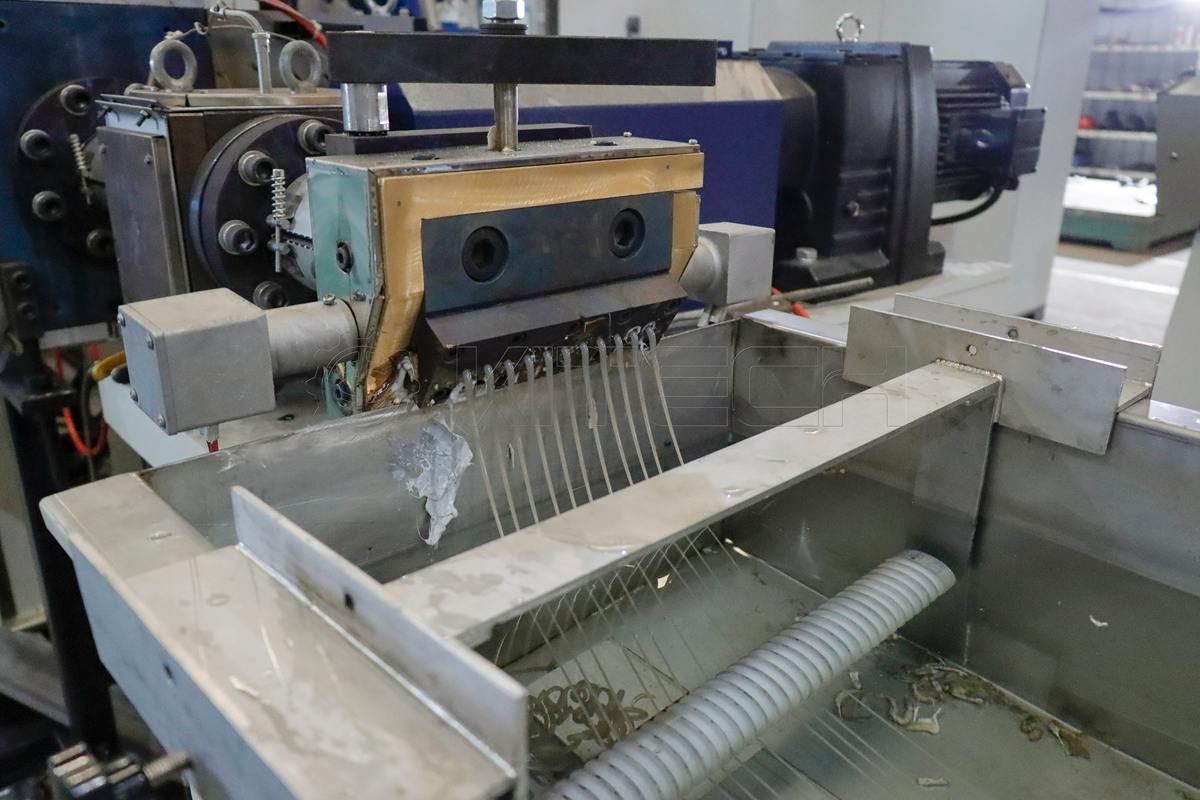
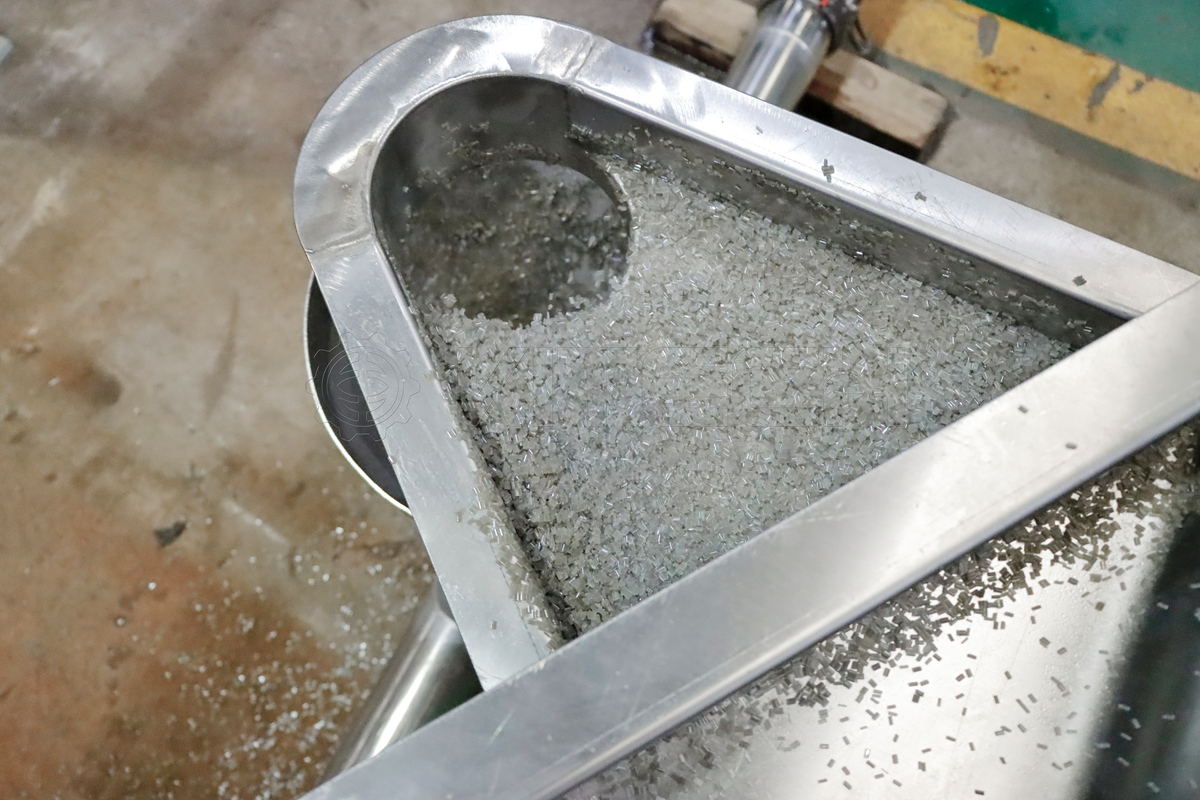
Pelletizing Method: Underwater pelletizing is the dominant method for PET. Strands are cut by rotating knives while fully submerged in cooling water, enabling rapid, uniform cooling, regular pellet shape (near-spherical/cylindrical), low fines generation, and better suitability for downstream handling (drying, conveying). Strand pelletizing (water bath) offers lower cooling efficiency and slightly less consistent pellet shape.
5. Cooling System:
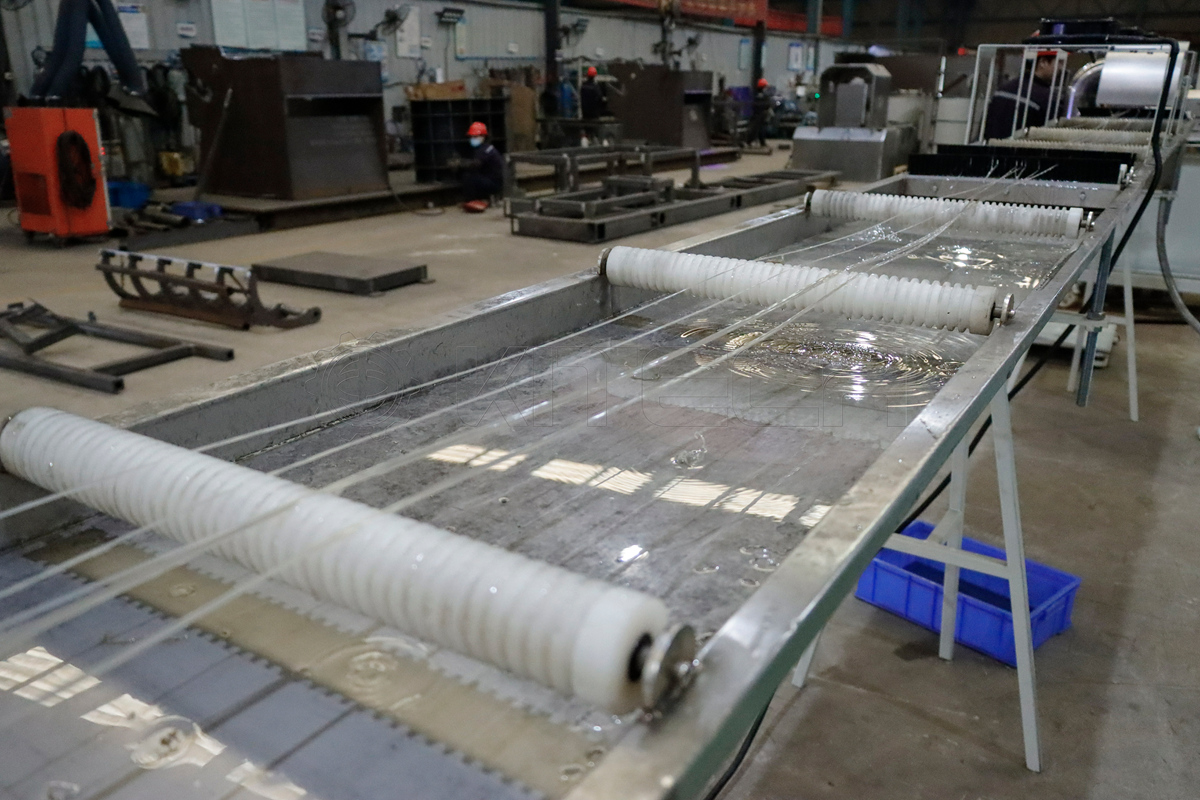
Efficient cooling water circulation and temperature control (e.g., water bath or water ring systems) are vital for quickly solidifying molten pellets, preventing agglomeration/deformation, and controlling crystallinity (affecting clarity). Cooling effectiveness must match production speed and melt temperature.
IV. Commitment to a Greener Planet
As a trailblazer in plastic recycling technology, Kitech Machinery empowers industries worldwide with smarter, sustainable solutions. Our mission? To turn the tide on plastic waste-efficiently, profitably, and responsibly."
Plastic Pelletizing Machine: Turn scraps into premium-grade pellets with precision efficiency.
Recycling & Washing Machine: Transform contaminated plastics into ready-to-reuse flakes.
Shredders & Crushers: Crush bulky waste effortlessly for seamless downstream processing.
Squeezer & Dryers: Applied for drying LDPE industry film/bag and PP woven bags - perfect for high-moisture plastics!
Contact us team for an initial discussion. We are committed to producing the best quality products at the most competitive prices.
Email: remond@kitechpm.com
Send an Inquiry: https://www.kitechrecycle.com/contact-us


